Do Foundation Repairs Damage Plumbing? What Homeowners Need to Know
Discover if foundation repairs damage plumbing and how to protect your home. Expert insights on hydrostatic tests and evaluations for homeowners.
Do Foundation Repairs Damage Plumbing?
If you're preparing to have your home's foundation repaired or leveled, you may have heard someone mention a hydrostatic test, drain line inspection, or plumbing evaluation.
Many homeowners immediately ask:
"Can foundation repairs damage my plumbing?"
The honest answer is:
Yes, foundation repairs can affect plumbing systems.
However, the relationship between foundation movement and plumbing problems is often more complicated than homeowners realize.
At Plunger Pros, we regularly work with homeowners throughout New Braunfels, San Antonio, Schertz, Cibolo, Bulverde, Spring Branch, Canyon Lake, and surrounding communities who are dealing with foundation movement, failed hydrostatic tests, and underground drain line repairs.
Understanding how foundation work affects plumbing can help homeowners avoid surprises and make informed decisions before repairs begin.
How Foundation Movement Affects Plumbing
To understand why plumbing problems can occur, it helps to understand how most homes in our area are built.
Unlike homes in other parts of the country, most homes throughout New Braunfels and San Antonio are built on concrete slab foundations rather than basements.
Because there is no basement, the home's drain system is installed beneath the foundation before the concrete is poured.
This means the drain lines are buried beneath the slab.
When the foundation moves, the plumbing system beneath it often moves as well.
Why Foundations Move
Central Texas is known for expansive soils.
These soils expand when moisture levels increase and contract when they dry out.
Over time, this cycle can cause:
Foundation settlement
Foundation lifting
Uneven movement
Structural stress
As the foundation moves, the plumbing system beneath it experiences stress as well.
What Happens to the Plumbing System?
When a foundation settles, rises, or shifts, underground drain lines may experience:
Pipe Breaks
Drain pipes can crack or break under stress.
Separated Joints
Pipe joints can pull apart, allowing wastewater to escape.
Sagging Drain Lines
Sections of piping can develop low spots, often called bellies or sags.
Backfall Conditions
Drain lines can lose their proper slope, causing drainage issues.
These problems can lead to:
Sewer backups
Slow drains
Failed hydrostatic tests
Underground leaks
Is the Plumbing Already Damaged Before Foundation Repairs?
Sometimes yes.
Sometimes no.
This is one of the reasons plumbing evaluations are so important.
In many situations, drain line leaks actually contribute to foundation problems.
For example:
A broken drain line may allow water to continuously leak beneath the foundation.
Over time, the excess moisture can affect soil conditions and contribute to foundation movement.
In these situations:
The plumbing problem existed first.
However, there are also situations where the plumbing system is functioning properly before foundation work begins.
Then, during the leveling process, the movement of the foundation places additional stress on the piping and causes new issues to develop.
Both scenarios occur regularly.
Can Foundation Leveling Cause New Plumbing Problems?
Yes.
When a foundation company lifts and levels a home, the drain system beneath the slab is forced to move with it.
Although the goal is to restore the foundation to a more level condition, the movement can place stress on:
Pipe joints
Fittings
Existing weak spots
Aging drain systems
This can result in:
Broken pipes
Separated joints
New leaks
Failed hydrostatic tests
This is one reason hydrostatic testing has become standard practice for many foundation companies.
Why Foundation Companies Recommend Hydrostatic Testing
Many homeowners wonder why foundation companies require hydrostatic testing before and after foundation work.
The answer is simple.
The Before Test
The pre-repair hydrostatic test establishes the condition of the drain system before any foundation work begins.
If the system already has leaks, everyone knows about them before the foundation is adjusted.
This helps establish a baseline condition.
The After Test
The post-repair hydrostatic test verifies whether the drain system is still holding water properly after the foundation work is complete.
If a leak is identified after leveling, additional evaluation can be performed.
These tests are often important for warranty purposes as well.
The Most Common Plumbing Problems Found After Foundation Repairs
When a home fails a hydrostatic test after foundation work, we commonly find:
Broken Drain Lines
The pipe itself has cracked or fractured.
Separated Joints
Sections of pipe have pulled apart.
Failed Fittings
Connections between pipes have loosened or broken.
Drain Line Movement
The drain system no longer maintains proper grade.
These issues often require additional testing to determine the exact location of the problem.
A Real Foundation Repair Plumbing Issue We Found in San Antonio
One project that stands out involved a homeowner in San Antonio.
We were originally replacing a water heater for one customer.
During the visit, that customer referred us to a neighbor who had recently completed foundation repairs.
After the foundation was leveled, the home failed the required hydrostatic test.
The homeowner needed to determine why.
We performed a sewer camera inspection and identified a break in the drain line beneath the home's foundation.
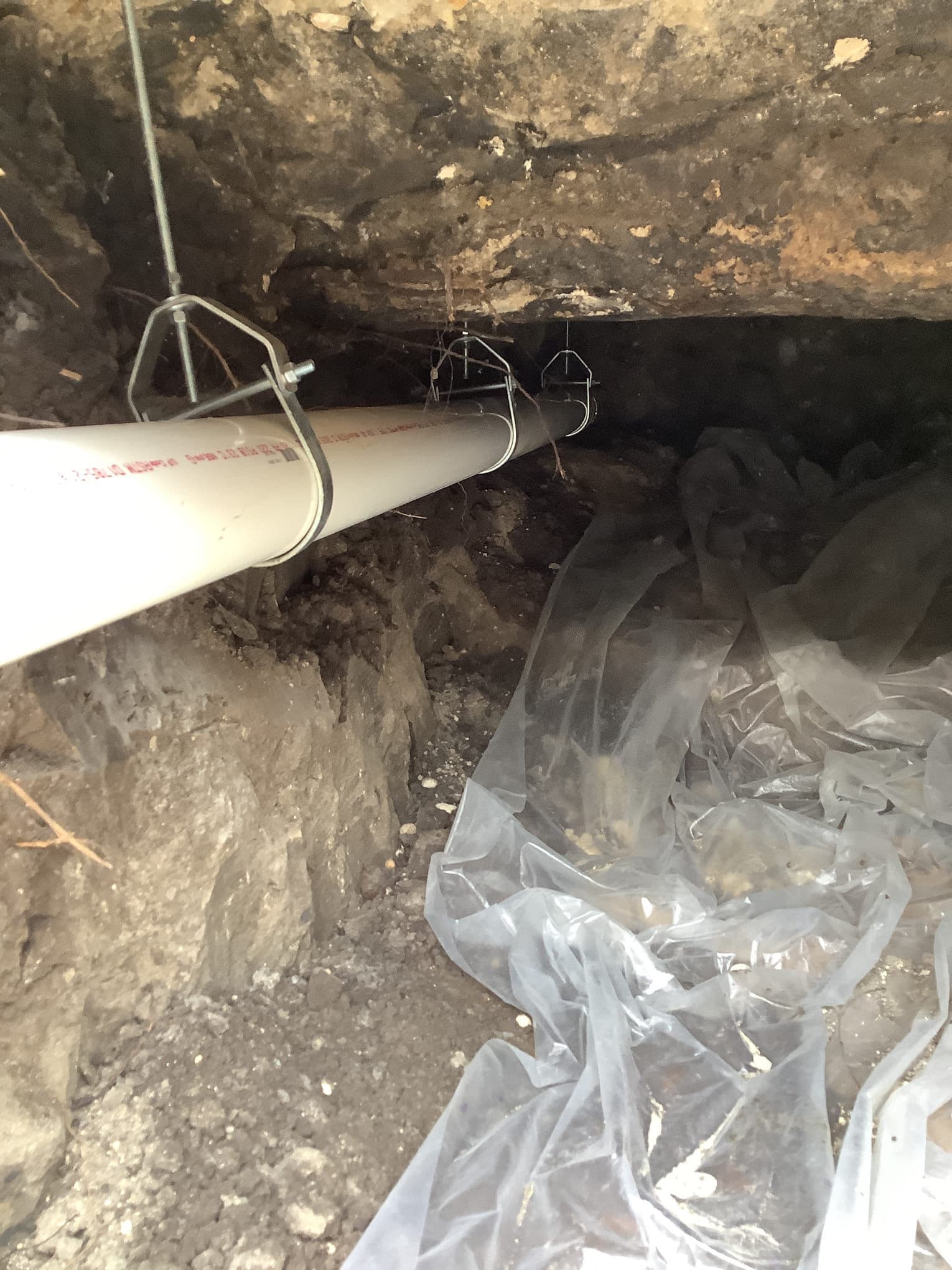
To access the damaged piping, we excavated a tunnel beneath the home.
Once the pipe was exposed, we repaired and replaced the damaged section.
After the repair was completed, we performed another hydrostatic test.
This time the system passed.
The leak was eliminated, and the homeowner was able to move forward with the foundation company's warranty requirements.
What Homeowners Should Do Before Foundation Repairs
If you're planning foundation work, there are several important steps you should take.
Understand What the Foundation Company Covers
This is extremely important.
Many homeowners assume the foundation company will automatically repair any plumbing issues that occur.
In reality, many foundation companies specifically exclude plumbing repairs from their scope of work.
Before signing a contract, ask:
What is covered?
What is excluded?
How are plumbing issues handled?
Understanding this beforehand can prevent unpleasant surprises later.
Consider a Hydrostatic Test
A pre-repair hydrostatic test establishes the condition of the drain system before foundation work begins.
This documentation can be valuable if questions arise later.
Consider a Sewer Camera Inspection
A camera inspection may reveal existing issues that should be addressed before foundation repairs begin.
What Homeowners Should Do After Foundation Repairs
Once foundation work is completed:
Schedule a Post-Repair Hydrostatic Test
This verifies that the drain system still holds water properly.
Perform a Sewer Camera Inspection
If concerns exist, a camera inspection can help identify visible damage.
Address Any Problems Quickly
If a leak is found, early repairs can help prevent additional issues and support warranty requirements.
What Happens If a Home Fails a Hydrostatic Test After Foundation Work?
A failed hydrostatic test does not automatically mean major repairs are needed.
The next step is determining exactly where the leak exists.
At Plunger Pros, we typically recommend:
Hydrostatic Pinpoint and Isolation Testing
Rather than testing the entire system at once, sections of the drain system are isolated and tested individually.
This allows us to narrow down the exact location of the leak.
Once identified, repair options can be discussed.
How Are Drain Line Repairs Typically Completed?
Throughout New Braunfels and San Antonio, the most common repair method is:
Tunneling
Rather than breaking through the foundation from inside the home, a tunnel is excavated from outside the home beneath the foundation.
This allows access to the damaged piping while minimizing disruption inside the house.
Once repairs are completed:
The system is hydrostatically tested
City inspections are performed
Engineering inspections are performed when required
The tunnel is backfilled
The Biggest Misconception About Foundation Repairs and Plumbing
The most common misconception we hear is:
"If the foundation is leveled, the plumbing will be fine."
Unfortunately, that's not always true.
Many homeowners don't realize that moving the foundation also moves the drain system beneath it.
Even when foundation repairs are completed successfully, the plumbing system still needs to be evaluated.
This is exactly why hydrostatic testing is so common before and after foundation work.
Protect Your Home Before and After Foundation Repairs
Foundation repairs are a major investment.
Taking the time to properly evaluate the plumbing system before and after the work is completed can help prevent unexpected surprises and expensive repairs later.
Whether you're preparing for foundation repairs, dealing with a failed hydrostatic test, or concerned about underground drain line damage, Plunger Pros can help.
We provide hydrostatic testing, sewer camera inspections, pinpoint and isolation testing, tunnel repairs, and under-slab drain line repairs throughout New Braunfels, San Antonio, Schertz, Cibolo, Bulverde, Spring Branch, Canyon Lake, and surrounding communities.
Plunger Pros
Plumbing done the proper way
M45279
(830) 356-2141
Frequently Asked Questions
Can foundation repairs damage plumbing?
Yes. Foundation leveling can place stress on underground drain lines, potentially causing breaks, separated joints, or other plumbing issues.
Why do foundation companies require hydrostatic testing?
Hydrostatic testing helps document the condition of the drain system before and after foundation work and supports warranty requirements.
Can a drain leak cause foundation problems?
Yes. In some situations, leaking drain lines can contribute to soil movement and foundation issues.
What happens if my home fails a hydrostatic test after foundation repairs?
Additional testing is usually performed to locate the leak. Once identified, repair options can be discussed.
How are broken drain lines beneath a foundation repaired?
In many cases, tunneling beneath the foundation is used to access and repair the damaged piping.
Should I get a sewer camera inspection before foundation work?
A camera inspection can help identify existing drain line issues before repairs begin and may help avoid future surprises.
Will the foundation company repair my plumbing if it's damaged?
Not always. Many foundation companies exclude plumbing repairs from their contracts, so homeowners should review the scope of work carefully.
Is it possible for plumbing to already be damaged before foundation repairs begin?
Absolutely. Some homes already have broken or leaking drain lines before foundation work starts, which is why pre-repair testing is so important.