How Do I Turn Off Water to My House? A Homeowner's Guide for New Braunfels and San Antonio
Discover how to locate and use your home's water shutoff valve, crucial for emergencies and DIY projects in New Braunfels and San Antonio.
How Do I Turn Off Water to My House?
One of the most important things every homeowner should know is how to shut off the water to their home.
Unfortunately, many homeowners don't realize they don't know where the shutoff valve is until they're standing in a puddle of water during an emergency.
Whether you're dealing with a burst pipe, leaking water heater, failed plumbing fixture, or simply planning a DIY plumbing project, knowing how to quickly shut off the water can help prevent thousands of dollars in water damage.
At Plunger Pros, we've responded to many emergency plumbing calls throughout New Braunfels, San Antonio, Schertz, Cibolo, Bulverde, Spring Branch, Canyon Lake, and surrounding communities where homeowners either didn't know where their shutoff valve was located or discovered it no longer worked when they needed it most.
Let's discuss where your shutoff valve is likely located and how to safely use it.
Where Is the Main Water Shutoff Valve Located?
In most New Braunfels and San Antonio homes, the main water shutoff valve is located:
Near the Water Meter
Typically, the city water meter is located:
In the front yard
Near the street
Near the sidewalk
Your home's main shutoff valve should typically be located immediately after the meter on the homeowner's side of the water service.
The valve is often located inside a small valve box buried in the ground.
Older Homes
Some older homes may have:
Water meters in rear alleys
Water meters in backyards
Alternative utility layouts
While less common, these situations still exist throughout portions of New Braunfels' and San Antonio's older neighborhoods.
Homes With Water Softener Loops
Many homes have a shutoff valve located at the water softener loop.
Using this valve will typically shut off water to the home itself but may not shut off:
Exterior hose bibs
Irrigation systems
Portions of the water service before the loop
Duplexes and Similar Buildings
In some duplexes, townhomes, and multifamily-style properties, we've seen shutoff valves located:
Inside garage walls
Behind access panels
Inside utility rooms
Can I Shut the Water Off at the City Meter?
Technically, yes.
However, homeowners should understand an important distinction.
The city meter assembly typically includes a valve that can shut off water to the property.
This valve requires a:
Meter Key
to operate.
The problem is that this valve belongs to the municipality.
In many areas, homeowners are not supposed to operate the city-owned valve.
If the valve is damaged, breaks, or becomes stuck during use, the homeowner may become responsible for:
Repair costs
Water loss
Potential fines
This is one reason plumbing codes require homeowners to have their own shutoff valve located after the meter.
Whenever possible, use your home's shutoff valve rather than the city's valve.
What's the Difference Between the City Valve and My Shutoff Valve?
Functionally, both valves will stop water from entering your home.
The difference is ownership and responsibility.
Homeowner Shutoff Valve
Belongs to you
Intended for homeowner use
Can be repaired or replaced by a plumber
City Meter Valve
Belongs to the municipality
Requires a meter key
May have restrictions on use
Damage can become the homeowner's responsibility
For everyday situations, your shutoff valve should be your first choice.
When Should You Turn Off the Water to Your Home?
There are several situations where shutting off the water may be necessary.
Plumbing Emergencies
Examples include:
DIY Plumbing Projects
Many repairs require the water to be shut off before work begins.
Examples include:
Faucet replacement
Toilet replacement
Shower valve repairs
Extended Vacations
Many homeowners choose to shut off the water when leaving town for extended periods.
Doing so can reduce the risk of major water damage if a leak develops while the home is unoccupied.
How Do I Turn Off the Water?
The process is usually simple.
Locate the Main Shutoff Valve
This is typically found inside the valve box near the meter.
Turn the Valve Off
Depending on the valve type:
Ball valves generally require a quarter turn
Gate valves require several turns
Verify Water Is Off
Open a faucet inside the home to confirm that water flow has stopped.
What If the Shutoff Valve Won't Turn?
This is one of the most common problems we encounter.
Many shutoff valves sit untouched for years.
Over time, they can become:
Corroded
Seized
Difficult to operate
If the valve won't turn:
Do Not Force It
Many homeowners accidentally break the handle while attempting to force a stuck valve.
This can create a much bigger problem.
If It's Not an Emergency
Contact a licensed plumber and have the valve replaced.
If It Is an Emergency
You may need to:
Use the city shutoff valve with a meter key
Contact the city
Contact a plumber
Whichever option can stop the water the fastest is usually the best choice during an active leak.
How Often Should Shutoff Valves Be Tested?
At Plunger Pros, we recommend testing shutoff valves:
At Least Once Per Year
Ideally Twice Per Year
Testing is simple.
Turn the valve:
Off
Then back on
This verifies:
The valve still operates
The handle isn't damaged
The valve won't surprise you during an emergency
Common Mistakes Homeowners Make
Forcing a Stuck Valve
This is probably the most common mistake.
A stuck valve can quickly become a broken valve.
Over-Tightening Older Gate Valves
Older gate valves can sometimes become damaged if they're closed too aggressively.
In some cases, the valve can become stuck in the closed position.
Not Knowing Where the Valve Is
You don't want to discover this during an emergency.
Every homeowner should know:
Where the valve is located
How it operates
Whether it still works
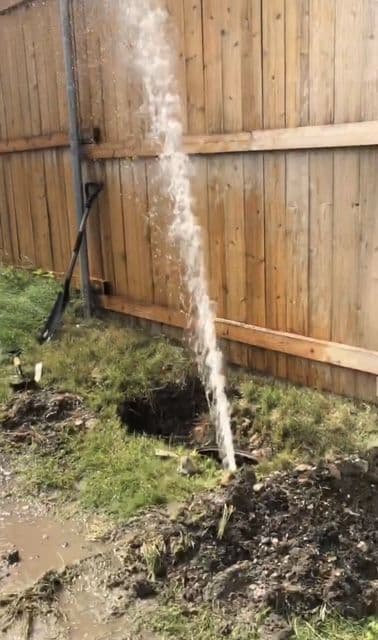
A Real New Braunfels Example
We recently helped a homeowner in New Braunfels who had a small leak from a shower valve.
The homeowner planned to replace the shower cartridge himself.
Before beginning the repair, he attempted to shut off the water to the home.
Unfortunately, the main shutoff valve had not been operated in years.
When he attempted to turn it off, the valve broke in the closed position.
The good news was that he successfully repaired the shower leak.
The bad news was that he couldn't turn the water back on.
When we arrived, we determined the shutoff valve had failed and needed replacement.
We excavated the valve box, removed the failed valve, and installed a new shutoff valve so water service could be safely restored to the home.
Situations like this are one reason we strongly encourage homeowners to periodically test their shutoff valves.
What's the Difference Between the Main Shutoff and Fixture Shutoffs?
Many fixtures have their own shutoff valves.
Examples include:
Under Sinks
Both hot and cold water lines typically have shutoff valves.
Behind Toilets
Toilets usually have a dedicated shutoff valve.
At Water Heaters
Water heaters have their own isolation valves.
Fixture Shutoff Valves
These valves only shut off water to a specific fixture.
The rest of the home remains operational.
They are ideal for:
Faucet repairs
Toilet repairs
Fixture replacement
Main Water Shutoff Valve
The main shutoff valve stops water to the entire home.
This affects:
All fixtures
All water lines
The home's main water supply
Don't Forget to Test Fixture Shutoff Valves Too
Just like the main shutoff valve, fixture valves can also seize over time.
We regularly encounter:
Frozen toilet valves
Stuck sink shutoffs
Failed fixture valves
Testing these periodically can help avoid surprises when repairs are needed.
The Most Important Thing Every Homeowner Should Do
If every homeowner in New Braunfels and San Antonio did one thing today, it would be this:
Find your main water shutoff valve and verify that it works.
Knowing where the valve is and confirming it operates properly can make all the difference during a plumbing emergency.
It takes only a few minutes and could save thousands of dollars in water damage.
Need Help Locating or Replacing a Shutoff Valve?
If your shutoff valve is stuck, leaking, broken, or difficult to operate, Plunger Pros can help.
We provide shutoff valve replacements, leak repairs, water service repairs, plumbing inspections, and emergency plumbing services throughout New Braunfels, San Antonio, Schertz, Cibolo, Bulverde, Spring Branch, Canyon Lake, and surrounding communities.
Plunger Pros
Plumbing done the proper way
M45279
(830) 356-2141
Frequently Asked Questions
Where is the main water shutoff valve usually located?
In most homes, the shutoff valve is located in a valve box near the city water meter, usually near the street or sidewalk.
Can I turn off the water at the city meter?
Yes, but the city valve belongs to the municipality and typically requires a meter key. Whenever possible, use your home's shutoff valve instead.
What tool do I need to shut off water at the meter?
A meter key is typically required to operate the city-owned meter valve.
How often should I test my shutoff valve?
At least once per year and ideally twice per year.
What should I do if my shutoff valve won't turn?
Do not force it. If it isn't an emergency, contact a plumber. If water is actively leaking, shut off the city valve or contact the city or a plumber for assistance.
Should I shut off my water when going on vacation?
Many homeowners choose to do so to reduce the risk of water damage while away from home.
What's the difference between a fixture shutoff valve and the main shutoff valve?
Fixture shutoff valves isolate a specific fixture, while the main shutoff valve turns off water to the entire home.
Why do shutoff valves fail?
Lack of use is one of the biggest reasons. Valves that sit untouched for years often become seized or corroded.