Hybrid Heat Pump Water Heaters: Benefits, Energy Savings & the New 2029 Regulations
Hybrid heat pump water heaters can dramatically reduce electricity use while providing the hot water your home needs. Learn how they work, their pros and cons, and what homeowners should know about the new federal water heater efficiency standards taking effect in 2029.
Hybrid Heat Pump Water Heaters: Benefits, Energy Savings & the New 2029 Regulations
If you have an electric water heater, there's a good chance you'll hear a lot more about hybrid heat pump water heaters over the next few years.
Heat pump water heaters aren't new. At Plunger Pros, we've been installing, repairing, and maintaining hybrid water heaters for years throughout New Braunfels, San Antonio, and the surrounding areas.
But upcoming federal efficiency standards are likely to make this technology much more common.
The U.S. Department of Energy has adopted new residential water heater efficiency standards, with compliance required beginning May 6, 2029. The standards significantly increase efficiency requirements for many newly manufactured electric storage water heaters and are expected to result in heat-pump technology being used in a much larger percentage of new electric water heaters.
That does not mean every homeowner will suddenly be required to remove their existing electric water heater in 2029.
It also doesn't mean a hybrid heat pump water heater is automatically the right choice for every home.
So what exactly is a hybrid water heater, how does it save energy, and what should homeowners in New Braunfels and San Antonio know before installing one?
Let's break it down.
What Is a Hybrid Heat Pump Water Heater?
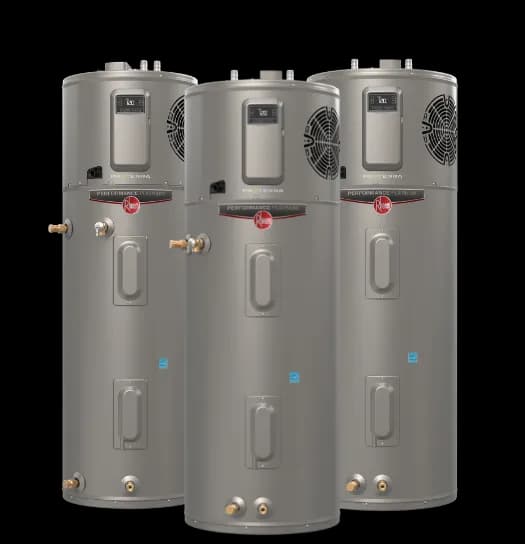
A hybrid heat pump water heater looks similar to a traditional electric tank water heater, but the way it heats the water is very different.
A standard electric water heater uses electric resistance heating elements inside the tank to generate heat.
A heat pump water heater primarily moves existing heat instead of creating it directly.
Think of it somewhat like an air-conditioning system working in reverse.
The heat pump pulls warm air from the surrounding space into the water heater. Refrigerant and a compressor are then used to transfer that heat to the water stored inside the tank.
After removing heat from the surrounding air, the water heater exhausts cooler air back into the space.
Most hybrid models also contain traditional electric heating elements.
That's where the term hybrid water heater comes from.
During normal operation, the system can rely primarily on the highly efficient heat pump. When hot-water demand increases or conditions require it, the electric elements can assist with recovery.
This combination provides the energy-saving benefits of heat-pump technology while still giving the system another way to produce hot water during periods of higher demand.
How Much Energy Can a Heat Pump Water Heater Save?
Energy efficiency is the biggest reason homeowners consider a hybrid water heater.
Rather than using electricity to generate all of the heat needed to warm the water, the system captures heat that's already available in the surrounding air and transfers it into the tank.
According to ENERGY STAR, certified heat pump water heaters can use approximately 70% less energy than a standard electric water heater.
Actual savings will vary depending on factors including:
Household hot-water usage
Electricity rates
Water-heater settings
Operating mode
Installation location
Incoming water temperature
Surrounding air temperature
The important point is that a heat pump can produce hot water using substantially less electricity than conventional electric resistance heating.
For a homeowner who plans to stay in the house for years, those operating-cost savings can help offset the higher upfront cost of the equipment.
An Extra Benefit for Texas Garages: Cool Air
There's another benefit that can be particularly noticeable in our part of Texas.
A heat pump water heater removes heat from the surrounding air.
That means the air leaving the water heater is cooler and typically drier than the air entering it.
If the water heater is installed in a garage, that cooling effect can actually be a nice side benefit during our hot Texas weather.
However, it's important to have realistic expectations.
A Heat Pump Water Heater Is Not an Air Conditioner
We don't recommend installing a heat pump water heater specifically to replace an air-conditioning system.
It's a water heater first.
How much it affects the temperature of the surrounding space depends on the installation, room size, water usage, operating mode, airflow, and other conditions.
But in the right garage, you can definitely notice the difference.
A San Antonio Homeowner Who Wanted a Cooler Garage
One of the more recent hybrid heat pump water heaters we installed was in a garage in San Antonio.
The homeowner used his garage as a workout area.
He was interested in the hybrid water heater primarily for two reasons:
Lower energy consumption
The cooling effect created by the heat pump
After installation, the difference in the garage was noticeable to him.
Again, we would never promise that installing a heat pump water heater will turn a hot Texas garage into an air-conditioned room.
That's not what the equipment is designed to do.
But in this particular installation, the cooling effect made the garage more comfortable while the homeowner also received the energy-efficiency benefits he was looking for.
He was extremely happy with the result.
This is a good example of why choosing a water heater isn't always simply a matter of comparing tank sizes.
How and where the homeowner uses the space can matter too.
What Are the Downsides of a Hybrid Water Heater?
Hybrid heat pump water heaters have significant benefits, but they're not automatically the best solution for every house.
There are several things homeowners should consider.
1. Higher Upfront Cost
The biggest disadvantage is usually the initial price.
A hybrid heat pump water heater typically costs more upfront than a conventional electric tank water heater.
The potential tradeoff is lower operating costs over the life of the equipment.
For someone primarily concerned with getting the lowest initial replacement cost, a conventional electric tank may make more sense where one remains an available and compliant option.
For someone looking at long-term energy consumption, a hybrid system may be worth the additional investment.
2. They Need Adequate Space and Airflow
A heat pump needs air.
Because the water heater extracts heat from the surrounding air, it can't simply be installed anywhere without considering the available space and airflow.
Manufacturer requirements vary by model, but heat pump water heaters generally need a sufficiently large room or an appropriate method of providing intake and exhaust airflow.
Garages can be particularly good locations in warm climates because they often provide substantial air volume and plenty of available heat.
Smaller closets may require additional ventilation or ducting depending on the water heater and installation.
This is one reason the installation location needs to be evaluated before choosing the equipment.
3. Condensate Has to Go Somewhere
Like an air conditioner, a heat pump can create condensation while operating.
That water needs to be properly drained.
A hybrid installation therefore requires consideration of the condensate drain in addition to the normal water, electrical, drain-pan, expansion-control, and other requirements associated with the water heater.
4. Heat Pump Recovery Can Be Slower
The most efficient way to operate the system is to rely heavily on the heat pump.
But transferring heat takes time.
During periods of heavy hot-water use, many hybrid units can activate their standard electric heating elements to increase recovery.
That gives homeowners flexibility, but using the resistance elements more frequently reduces some of the energy-saving advantage.
Proper sizing and operating settings are therefore important.
Do I Need a Bigger Tank With a Heat Pump Water Heater?
Not necessarily.
In our market, 50-gallon water heaters are extremely common, and that's also one of the hybrid sizes we regularly see and install.
For many homes in the New Braunfels and San Antonio area, a properly selected 50-gallon system provides the hot-water capacity the household needs.
In larger homes, we also frequently encounter two 50-gallon water heaters rather than one very large 80-gallon or larger tank.
However, tank capacity shouldn't be chosen based on gallons alone.
Household size, fixture demand, usage patterns, First Hour Rating, operating mode, available space, and recovery requirements all need to be considered.
A larger heat pump tank can sometimes allow the system to store more hot water and rely less frequently on its conventional electric heating elements.
The correct size is ultimately the one that matches the home's actual demand.
What Are the New Water Heater Regulations Coming in 2029?
This is the part homeowners are likely to hear more about as we get closer to 2029.
The U.S. Department of Energy finalized updated energy-conservation standards for residential water heaters in 2024.
Compliance with the amended standards is required beginning:
May 6, 2029
The regulations establish higher minimum efficiency requirements for newly manufactured water heaters covered by the rule.
For electric storage water heaters, the new standards are significant because heat-pump technology provides a practical way for many products to reach the required efficiency levels.
DOE has said the updated standards are expected to cause heat-pump technology to be used in a much larger share of newly manufactured electric storage water heaters.
Does This Mean Standard Electric Water Heaters Will Be Illegal?
This is where the new regulation can easily become confusing.
The rule does not mean that on May 6, 2029, homeowners with conventional electric water heaters must remove them.
If you have a functioning conventional electric water heater in your home, the regulation isn't a mandate requiring you to replace it with a heat pump water heater on that date.
The standards apply to the efficiency of newly manufactured water-heating equipment covered by the regulation.
It is also an oversimplification to say that every electric water heater will suddenly disappear.
The exact requirements depend on the water heater's product class, size, capacity, and other characteristics.
The practical takeaway for homeowners is much simpler:
Heat pump water heaters are likely to become considerably more common as the new efficiency requirements take effect.
Should I Replace My Water Heater Before the New Regulations?
Not necessarily.
We don't recommend replacing a perfectly functional water heater simply because 2029 is approaching.
However, the age of your existing water heater is worth considering.
In our experience servicing water heaters throughout New Braunfels and San Antonio, we commonly see traditional tank water heaters last around 8–10 years.
That's an average based on what we encounter in the field, not a guaranteed lifespan.
We've seen tanks fail after only four to six years.
We've also seen water heaters continue operating for 12–15 years.
Maintenance, water quality, installation quality, operating conditions, pressure, and the individual water heater can all affect its lifespan.
If your water heater is already approaching or exceeding the 8–10-year range, it's a good idea to begin thinking about replacement before you're forced to make the decision during an emergency.
That doesn't necessarily mean replacing it today.
It means understanding your options ahead of time.
Hybrid vs. Standard Electric Water Heater: Which Is Better?
There isn't one answer for every homeowner.
That's why we don't believe in automatically recommending the most expensive piece of equipment available.
A hybrid heat pump water heater may make sense if:
Reducing electricity consumption is important to you
You plan to remain in the home long enough to benefit from lower operating costs
Your installation location has adequate space and airflow
Your water heater is located in a warm garage or similar suitable area
You're planning ahead for changing water-heater efficiency standards
You want newer water-heating technology and additional operating controls
A conventional electric tank may still make sense if:
Upfront cost is the primary concern
Energy savings aren't a major priority
The installation space isn't appropriate for a heat pump
A compliant conventional unit is available for the application
Your particular home's needs make a standard tank the more practical choice
The correct decision comes down to the homeowner, the home, the available equipment, and what they're trying to accomplish.
Do Hybrid Water Heaters Still Need Maintenance?
Absolutely.
A more efficient water heater is still a water heater.
And here in Central Texas, hard water doesn't stop being hard just because the water heater has a heat pump attached to it.
Mineral buildup can still accumulate inside the tank.
For that reason, we recommend regular maintenance just as we would with a conventional tank water heater.
Depending on the water heater and installation, maintenance may include:
Flushing the tank
Inspecting the anode rod
Checking the water connections
Inspecting the drain pan
Checking the expansion tank
Inspecting electrical components
Checking for leaks or corrosion
Hybrid water heaters also introduce a few additional maintenance items.
Air Filter
Because the heat pump moves air through the system, the air inlet/filter needs to remain clean.
A dirty filter can restrict airflow and affect performance.
The filter should therefore be inspected and cleaned according to the manufacturer's recommendations.
Condensate Drain
The condensate drain also needs to remain clear and properly routed.
A blocked or improperly draining condensate line can create problems even when the water-heating portion of the system is otherwise operating correctly.
Regular maintenance allows these components to be inspected along with the tank itself.
Does Hard Water Affect Hybrid Water Heaters?
Yes.
A hybrid water heater doesn't eliminate the effects of hard water.
The water stored inside the tank is still exposed to the same hardness minerals found throughout our local water supply.
Those minerals can accumulate as scale and sediment over time.
That's one reason we recommend annual water-heater maintenance and why we frequently recommend water softening for homes throughout New Braunfels and San Antonio.
Protecting the tank from excessive scale buildup can help maintain performance and reduce unnecessary stress on the plumbing system.
Are Hybrid Heat Pump Water Heaters New Technology?
Not really.
They may seem new because they're becoming more visible, but heat pump water heaters have been available for decades.
At Plunger Pros, we've already been installing and servicing hybrid systems for years.
One of the most common models we encounter locally is the Rheem hybrid heat pump water heater.
As the 2029 federal standards get closer, we expect homeowners to hear considerably more about this type of equipment.
For many plumbers and homeowners, that may feel like a major change.
For us, it isn't an entirely new service we're preparing to offer.
It's equipment we already install, diagnose, repair, and maintain.
Planning Ahead Is Better Than Choosing During an Emergency
A leaking water heater has a way of making decisions for you.
When a tank fails and water is leaking into the garage or home, most homeowners aren't interested in spending hours researching efficiency standards, heat-pump technology, tank capacity, operating costs, and installation requirements.
They need hot water restored.
That's why the best time to learn about your replacement options is before your existing water heater fails.
If your electric water heater is approaching the end of its expected service life, you can start considering:
Standard electric vs. hybrid
Initial installation cost
Expected energy consumption
Available installation space
Airflow requirements
Tank capacity
Condensate drainage
Maintenance requirements
Upcoming efficiency standards
Then, when replacement becomes necessary, you've already considered the options.
The Bottom Line
Hybrid heat pump water heaters aren't the perfect solution for every homeowner.
But they offer a significant advantage that conventional electric tanks can't match: substantially lower electricity consumption by moving heat instead of relying entirely on electric resistance elements to create it.
For homeowners in New Braunfels and San Antonio, our warm climate can also make garages particularly attractive locations for heat-pump water heaters, provided the installation meets the manufacturer's requirements.
And with new federal water-heater efficiency standards taking effect in 2029, heat-pump technology is likely to become an increasingly important part of residential water heating.
That doesn't mean you need to replace your existing water heater today.
It means homeowners should understand that the market is changing and know their options before their next water heater fails.
At Plunger Pros, we've been installing and servicing hybrid heat pump water heaters for years. We can evaluate your existing system, discuss the differences between available options, and help determine which type of water heater makes the most sense for your home.
Because the best water heater isn't necessarily the newest or most expensive one.
It's the one that properly fits your home and your needs.
Related Plumbing Resources
Consider internally linking this article to:
Does Hard Water Damage Water Heaters?
Tankless Water Heater Maintenance
Signs You Need a Water Softener
Powered Anode Rods: Are They Worth It?
What Is Considered High Water Pressure?
What Plumbing Services Does a Full-Service Plumber Handle?
Frequently Asked Questions
What is a hybrid heat pump water heater?
A hybrid heat pump water heater primarily uses electricity to transfer heat from the surrounding air into the water stored in the tank. Most hybrid models also contain traditional electric resistance heating elements that can assist when additional hot-water recovery is needed.
Do heat pump water heaters really save electricity?
Yes. According to ENERGY STAR, certified heat pump water heaters can use approximately 70% less energy than standard electric resistance water heaters. Actual household savings depend on electricity rates, hot-water usage, operating mode, installation conditions, and other factors.
Will I be required to replace my electric water heater in 2029?
No. The new federal efficiency standards do not require homeowners to remove functioning existing electric water heaters on May 6, 2029. The standards establish efficiency requirements for newly manufactured water-heating equipment covered by the regulation.
Are conventional electric water heaters being banned?
Describing the regulation as a blanket ban on electric tank water heaters is misleading. The 2029 standards establish higher minimum efficiency levels for covered water-heater product classes. Those requirements are expected to significantly increase the use of heat-pump technology in newly manufactured electric storage water heaters.
When do the new water heater efficiency standards take effect?
Compliance with the U.S. Department of Energy's amended consumer water-heater efficiency standards is required beginning May 6, 2029.
Can a hybrid water heater cool my garage?
A heat pump water heater removes heat from the surrounding air and exhausts cooler air, so it can have a noticeable cooling and dehumidifying effect in some garages. However, it isn't an air-conditioning system, and homeowners shouldn't expect it to provide the same level of temperature control as an actual AC system.
Do hybrid water heaters work well in Texas?
A warm garage can be a good installation location for a heat pump water heater because the system has access to warm surrounding air. The specific installation still needs to meet the water-heater manufacturer's requirements for space, airflow, temperature, clearance, and condensate drainage.
Do heat pump water heaters need maintenance?
Yes. The tank still needs appropriate water-heater maintenance, especially in areas with hard water. Hybrid models also have heat-pump-specific maintenance considerations, including keeping the air filter clean and making sure the condensate drain remains clear.
Does Plunger Pros install hybrid heat pump water heaters?
Yes. Plunger Pros has been installing, repairing, and maintaining hybrid heat pump water heaters for years. We service homeowners throughout New Braunfels, San Antonio, and surrounding areas.
Should I replace an 8- to 10-year-old water heater?
A water heater reaching 8–10 years old is worth monitoring and planning for. In our field experience, many tank water heaters in our area last around 8–10 years, although actual lifespan varies considerably. Planning ahead allows you to compare standard, hybrid, tankless, and other appropriate options before a failure forces an emergency decision.
Considering a Hybrid Water Heater?
If your existing electric water heater is getting older or you're interested in reducing your home's water-heating energy use, Plunger Pros can help you compare your options.
We install, maintain, diagnose, and repair traditional and hybrid heat pump water heaters throughout New Braunfels, San Antonio, and surrounding areas.
Plunger Pros
Plumbing done the proper way.
M45279
(830) 356-2141