What is considered high water pressure? A Texas homeowenrs guide
Explore why high water pressure is a silent threat to plumbing. Learn to identify issues and protect your Texas home with expert tips. Check your plumbing now!
What Is Considered High Water Pressure?
Many homeowners assume that strong water pressure is a good thing.
After all, nobody likes a weak shower or slow-filling bathtub.
But what many people don't realize is that excessive water pressure can quietly damage your plumbing system for years before the first leak appears.
At Plunger Pros, we routinely find homes throughout New Braunfels, San Antonio, Schertz, Cibolo, Bulverde, Spring Branch, Canyon Lake, and surrounding communities operating with water pressure well above safe levels. In fact, one of the most common things we discover during service calls is that the plumbing problem a homeowner is experiencing is actually being caused by excessive water pressure.
The challenge is that most homeowners don't know they have high water pressure until something starts leaking.
Let's discuss what water pressure is considered too high, why it matters, and how it can affect your home's plumbing system.
What Is Water Pressure?
Water pressure is the force that pushes water through your home's plumbing system.
It is measured in PSI, which stands for pounds per square inch.
The higher the PSI, the harder water is pushing against:
Pipes
Fittings
Faucets
Toilets
Water heaters
Appliances
Valves
While sufficient pressure is necessary for your plumbing system to function properly, too much pressure creates unnecessary stress on every component connected to the system.
What Water Pressure Is Considered Too High?
According to plumbing code, 80 PSI is the maximum allowable water pressure for a residential plumbing system.
Once pressure exceeds 80 PSI, corrective action should be taken.
At Plunger Pros, we typically recommend maintaining water pressure between:
60 to 70 PSI
This range provides:
Strong fixture performance
Good shower pressure
Proper appliance operation
Reduced strain on plumbing components
Longer system lifespan
Many homeowners are surprised to learn that pressure can feel excellent at 60 to 70 PSI without placing excessive stress on the plumbing system.
How Common Is High Water Pressure in New Braunfels and San Antonio?
Extremely common.
In fact, most homes throughout the New Braunfels and San Antonio area have water delivered by the water provider at pressures that exceed 80 PSI.
Because of this, many homes are equipped with a Pressure Reducing Valve (PRV), typically located immediately downstream of the water meter burried in the yard with a valve box for access.
The PRV's job is to reduce incoming city water pressure to a safe operating pressure for the home.
When functioning properly, the PRV protects the entire plumbing system.
When it fails, problems begin to appear.
We've tested homes with pressures exceeding:
100 PSI
One of the highest pressures we've encountered was approximately 150 PSI in the Stone Oak area of San Antonio.
At that pressure, damage to the plumbing system is often only a matter of time.
Why High Water Pressure Is a Problem
Many homeowners think:
"If the water pressure feels good, why does it matter?"
The answer is simple.
Your plumbing system was never designed to continuously operate above safe pressure limits.
Imagine inflating a balloon.
A little pressure is necessary.
Too much pressure eventually causes failure.
Your plumbing system works the same way.
Every day, excessive pressure places additional strain on:
Pipes
Fittings
Water heaters
Faucets
Toilets
Washing machine hoses
Ice maker lines
Dishwasher connections
Shutoff valves
The damage may not happen immediately, but over time it adds up.
Common Signs of High Water Pressure
Water Hammer or Banging Pipes
One of the most common symptoms is what plumbers call water hammer.
This often sounds like:
Banging
Knocking
Thumping
Hammering
inside the walls when fixtures are turned on or off.
These sounds occur because water moving at excessive pressure creates shockwaves within the plumbing system.
Over time, these repeated shocks can damage pipes and fittings.
Water Heater Temperature & Pressure Relief Valve Leaking
The Temperature and Pressure Relief Valve (T&P Valve) on your water heater is a safety device.
Its purpose is to relieve excessive temperature or pressure within the system.
When homeowners notice water dripping from the discharge pipe, many assume the valve itself has failed.
Sometimes that's true.
However, many times the valve is simply doing its job and responding to excessive system pressure.
Replacing the valve without testing water pressure often fails to solve the actual problem.
Faucet Leaks
High pressure can wear out:
Faucet cartridges
O-rings
Washers
Seals
faster than normal.
Many homeowners repeatedly repair or replace leaking faucets without ever addressing the pressure that is causing the failures.
Toilet Problems
Excessive water pressure can also contribute to:
Running toilets
Fill valve failures
Supply line leaks
Premature component wear
Because toilets contain multiple moving parts, they are often among the first fixtures affected by high pressure.
Plumbing Leaks
Eventually, the constant stress created by excessive pressure can result in:
Pipe leaks
Fitting leaks
Valve leaks
Appliance connection leaks
Sometimes these failures occur suddenly.
Other times they develop slowly over many years.
What Causes High Water Pressure?
In our service area, high water pressure is almost always caused by one of two things.
No Pressure Reducing Valve Installed
Many older homes either never had a PRV installed or had plumbing modifications made over the years.
Without a PRV, the home's plumbing system receives full city pressure.
In many parts of our area, this exceeds code limits.
Failed Pressure Reducing Valve
By far the most common cause we encounter is a failed PRV.
Pressure Reducing Valves are mechanical devices.
Like any plumbing component, they eventually wear out.
When a PRV fails, pressure often begins creeping upward until it reaches city pressure levels.
This can happen gradually enough that homeowners never notice until leaks begin appearing.
How We Test Water Pressure
Testing water pressure is straightforward.
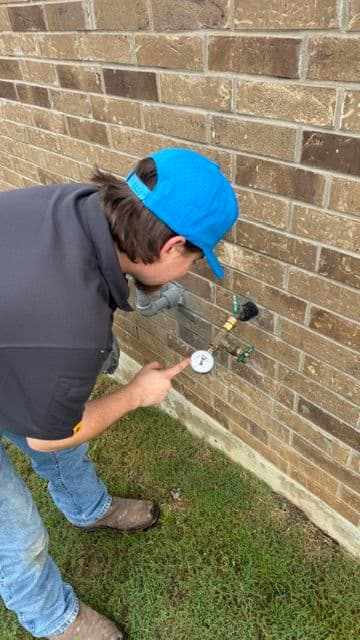
We use a calibrated pressure gauge that connects to an exterior hose bib.
The gauge provides a static pressure reading of the home's plumbing system.
This allows us to quickly determine:
Whether pressure exceeds code
Whether a PRV may have failed
Whether further testing is needed
Water pressure testing is one of the first things we perform when investigating many plumbing problems.
Why We Check Water Pressure During Leak Calls
At Plunger Pros, our goal isn't simply to repair the immediate issue.
We want to determine why the issue occurred.
Many plumbers stop after fixing the visible leak.
We prefer to identify contributing factors that may cause future problems.
This often includes evaluating:
Water pressure
Water quality
Existing plumbing materials
Age of plumbing components
By identifying the root cause, homeowners can make informed decisions about protecting their plumbing system.
The Biggest Misconception About Expansion Tanks
One of the most common misconceptions we hear is:
"Can't we just install an expansion tank?"
The answer is no.
An expansion tank does not fix high water pressure.
An expansion tank serves a completely different purpose.
Its job is to absorb pressure created when water expands during the heating process inside the water heater.
It helps manage thermal expansion.
It does not reduce incoming city water pressure.
If a home's pressure is too high, the correct solution is usually:
Installing a PRV
Replacing a failed PRV
Adjusting a recently installed PRV
The expansion tank and PRV work together, but they are not interchangeable.
High Water Pressure and Water Heaters
High water pressure can absolutely shorten the lifespan of a water heater.
The constant stress affects:
Tank welds
Internal components
Water heater fittings
Relief valves
Over time, this can contribute to:
Leaks
Premature failure
T&P valve discharge
Reduced equipment life
This is one reason we always evaluate pressure when diagnosing water heater issues.
A Real High-Pressure Plumbing Problem in Stone Oak
We recently worked with a homeowner in the Stone Oak area of San Antonio who was experiencing a series of unusual plumbing problems.
The T&P valve on their water heater had already been replaced by another plumber.
Unfortunately, the water pressure was never tested.
Not long after the repair, the replacement T&P valve began leaking again.
Around the same time, the homeowner connected a hose-end weed killer sprayer to an exterior hose bib.
When the water was turned on, the bottle literally blew apart from the pressure.
The homeowner contacted us to investigate.
After performing a pressure test, we found the home's water pressure was approximately 140 PSI.
The root cause wasn't the T&P valve.
The root cause was excessive water pressure.
To solve the problem, we installed a high-pressure-rated PRV and replaced the failed expansion tank.
Once the pressure was properly controlled, the system returned to normal operation.
How to Protect Your Plumbing System
If your home has never had its water pressure tested, it's worth having it checked.
Many homeowners are surprised to learn their system has been operating above safe pressure limits for years.
Correcting high water pressure can help:
Prevent leaks
Protect fixtures
Extend water heater life
Reduce plumbing repairs
Improve overall system reliability
In many cases, addressing the pressure issue early can prevent much larger plumbing expenses later.
Need Your Water Pressure Tested?
If you're experiencing leaking fixtures, water hammer, water heater issues, recurring plumbing leaks, or simply want to verify your home's water pressure is within a safe range, Plunger Pros can help.
We provide water pressure testing, PRV replacement, expansion tank services, water heater repairs, and plumbing inspections throughout New Braunfels, San Antonio, Schertz, Cibolo, Bulverde, Spring Branch, Canyon Lake, and surrounding communities.
Plunger Pros
Plumbing done the proper way
M45279
(830) 356-2141
Frequently Asked Questions
What is considered high water pressure in a home?
Anything above 80 PSI is considered excessive and exceeds plumbing code limits.
What is the ideal water pressure for a house?
We typically recommend maintaining pressure between 60 and 70 PSI.
Can high water pressure cause leaks?
Yes. Excessive pressure places strain on pipes, fittings, fixtures, and appliances, increasing the likelihood of leaks.
Can high water pressure damage a water heater?
Yes. High pressure can shorten the lifespan of water heaters and contribute to relief valve discharge and premature failures.
What causes high water pressure?
The most common causes are high city water pressure and failed Pressure Reducing Valves (PRVs).
Can an expansion tank lower water pressure?
No. Expansion tanks manage thermal expansion but do not reduce incoming water pressure.
How do plumbers test water pressure?
A pressure gauge is attached to an exterior hose bib to measure the home's static water pressure.
How often should water pressure be checked?
We recommend testing water pressure whenever plumbing issues arise and during routine plumbing inspections. Idealy once a year.
Where is a PRV usually located?
Most PRVs in New Braunfels, San Antonio, and surrounding areas are installed immediately downstream of the water meter, burried in the yard with a valve box for access, where the water service enters the property.
What happens if a PRV fails?
The home's plumbing system may begin receiving full city water pressure, often resulting in excessive pressure and increased wear on plumbing components. The failure could also have the opposite effect and cause there to be low water pressure throughout the system.