What Causes Sewer Smells in a House? New Braunfels & San Antonio Plumber
Explore the common causes of sewer smells in homes and learn how to address them, from dry p-traps to broken pipes, with Plunger Pros experts.
What Causes Sewer Smells?
Few things are more unpleasant than walking into your bathroom, laundry room, or another area of your home and being greeted by a sewer smell.
One of the first questions homeowners ask is:
"Do I have a sewer line problem?"
Sometimes the answer is yes.
However, many sewer odors are caused by much smaller plumbing issues that can often be identified and repaired before they become major problems.
At Plunger Pros, we help homeowners throughout New Braunfels, San Antonio, Schertz, Cibolo, Bulverde, Spring Branch, Canyon Lake, and surrounding communities track down sewer odors and determine exactly where they are coming from.
The challenge is that sewer gas can travel through walls, plumbing systems, and drain lines, making the source difficult to identify without proper testing.
Let's look at the most common causes of sewer smells, how your plumbing system is designed to prevent them, and what you should do if you notice a sewer odor in your home.
What Is Sewer Gas?
Sewer gas is a mixture of gases produced as wastewater and organic material decompose inside the sewer system.
The primary gases found in sewer gas include:
Hydrogen sulfide
Methane
Ammonia
Carbon dioxide
The rotten egg smell most people associate with sewer odors is typically caused by hydrogen sulfide.
Under normal circumstances, these gases remain safely contained inside your home's drainage and vent system.
Your plumbing system is specifically designed to keep sewer gas out of your living space.
When you begin smelling sewer odors inside the home, it usually means something within that system is no longer functioning properly.
Can Sewer Gas Be Dangerous?
This is one of the most common questions homeowners ask.
The answer is yes, sewer gas can be dangerous in high concentrations.
Sewer gas contains several potentially harmful gases, including hydrogen sulfide and methane.
Exposure to small amounts may cause symptoms such as:
Headaches
Nausea
Dizziness
Eye irritation
In very high concentrations, sewer gas can become extremely dangerous and may lead to serious health effects.
Fortunately, the sewer odors we encounter in homes are almost always caused by relatively small amounts of sewer gas escaping from the plumbing system.
While the immediate health risk is usually low, sewer smells should never be ignored because they indicate a problem that needs to be addressed.
How Your Plumbing System Prevents Sewer Smells
Before discussing the causes of sewer odors, it helps to understand how your plumbing system normally prevents them.
Every drain fixture in your home contains a trap.
These include:
Bathroom sinks
Kitchen sinks
Showers
Bathtubs
Floor drains
Laundry drains
These traps, commonly called p-traps, hold water at all times.
That water creates a seal between your home and the sewer system.
The water acts as a barrier that prevents sewer gases from entering the home.
Your plumbing system also contains vent pipes that extend through the roof.
These vents allow sewer gases to safely escape outdoors while helping the drainage system function properly.
When either of these systems fails, sewer odors can begin entering the home.
The Most Common Causes of Sewer Smells
Dry P-Traps
One of the most common causes of sewer odors is a dry p-trap.
This is especially common in:
Guest bathrooms
Unused showers
Spare bathrooms
Floor drains
Vacant homes
When a fixture sits unused for an extended period, the water inside the p-trap can evaporate.
Once the water is gone, there is nothing preventing sewer gas from entering the home.
This is one of the simplest sewer odor problems to fix.
In many cases, simply running water into the drain refills the trap and restores the seal.
Failed Toilet Wax Rings
Another common cause of sewer smells is a failed toilet wax ring.
The wax ring creates a seal between the toilet and the drain pipe beneath it.
If that seal fails, sewer gases can escape around the base of the toilet and enter the bathroom.
Signs of a failed wax ring may include:
Sewer odor near the toilet
Water around the toilet base
Loose or rocking toilet
Staining around the toilet
Many homeowners assume a toilet leak must be visible before there is a problem.
In reality, sewer gas can often escape long before water becomes noticeable.
Improperly Installed Toilets
One of the most overlooked causes of sewer smells is an improperly installed toilet.
Even a newer toilet can develop sewer odor issues if it was not installed correctly.
We frequently encounter situations where:
The toilet flange is damaged
The toilet was not secured properly
The wax ring was compressed incorrectly
Multiple wax rings were stacked improperly
These issues can allow sewer gas to bypass the seal and enter the home.
Broken or Damaged Vent Pipes
Many homeowners are surprised to learn that plumbing vents can cause sewer odors.
Vent pipes are designed to carry sewer gases safely above the roofline.
If a vent pipe becomes damaged, disconnected, or punctured, sewer gas may escape into:
Walls
Attics
Ceiling cavities
We've seen situations where homeowners unknowingly drove screws or nails into vent pipes during remodeling projects.
We've also seen vent connections come apart over time.
When this occurs, sewer odors can appear throughout the home even though the drains themselves are functioning normally.
Broken Drain Lines
Sometimes the problem is more serious.
A cracked, broken, or separated drain line can allow sewer gas to escape before it reaches the main sewer system.
Depending on where the damage occurs, sewer odors may appear:
Inside the home
Beneath the home
In specific rooms
Around the foundation
These situations often require additional testing to locate the source.
Do Sewer Smells Always Mean You Have a Sewer Line Problem?
No.
This is one of the biggest misconceptions homeowners have.
While damaged sewer lines can certainly cause sewer odors, many sewer smell calls end up being caused by:
Dry p-traps
Failed toilet seals
Venting issues
Plumbing fixture problems
That is why proper diagnosis is so important.
Replacing a sewer line won't solve a sewer smell caused by a dry p-trap.
Likewise, repeatedly filling a p-trap won't solve a sewer smell caused by a broken drain line beneath the foundation.
How Can You Tell If It's Actually Sewer Gas?
Most homeowners describe sewer gas as:
Rotten eggs
Sulfur
Sewage
Decaying organic matter
The odor is usually strongest near:
Toilets
Showers
Bathtubs
Sinks
Laundry drains
However, not every unpleasant smell is sewer gas.
Microbial Growth and Mildew
Microbial growth typically produces a musty or earthy odor.
These smells are often associated with moisture issues rather than plumbing venting issues.
Standing Water
Stagnant water can smell unpleasant but usually lacks the sulfur smell associated with sewer gas.
Dead Animals
Dead animals often create a strong decomposing odor that may be mistaken for sewer gas.
These odors frequently originate in:
Walls
Attics
Crawlspaces
Water Heater Issues
In some cases, sulfur odors can originate from hot water due to bacteria reacting with the water heater's anode rod.
When this occurs, the smell is typically noticeable only when running hot water.
How We Diagnose Sewer Odors
Tracking down sewer odors can sometimes be straightforward.
Other times it requires more extensive testing.
Our process typically starts by identifying where the smell is strongest.
For example:
Bathroom
Laundry room
Specific drain
Particular area of the home
Once we narrow down the location, we inspect the most common sources.
This often includes:
Checking p-traps
Verifying traps contain water
Inspecting toilets
Examining venting systems
Evaluating drain conditions
If the source remains unclear, we may recommend a smoke test.
What Is a Plumbing Smoke Test?
A smoke test is one of the most effective ways to locate hidden sewer gas leaks.
During the test, harmless smoke is introduced into the plumbing system.
Wherever sewer gas can escape, smoke can escape as well.
This allows us to identify:
Failed seals
Broken vent pipes
Cracked drain lines
Hidden plumbing defects
Smoke testing is especially useful when odors are intermittent or difficult to trace.
A Real Sewer Smell Problem We Found Beneath a Foundation
We recently helped a homeowner who was experiencing a persistent sewer smell in one of their bathrooms.
Initially, the odor appeared to be coming from the shower drain.
Our first thought was that the p-trap may have dried out from lack of use.
However, after speaking with the homeowner, we learned that the shower was being used every day.
That immediately ruled out one of the most common causes.
We filled the trap and inspected the drain system.
After monitoring the drain, we noticed the water level inside the trap slowly dropping again.
This allowed sewer gas to re-enter the home.
To investigate further, we performed a sewer camera inspection.
The camera revealed the real problem.
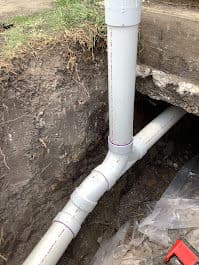
The shower p-trap had broken beneath the home's foundation.
Because the trap could no longer hold water, sewer gas was entering the home through the damaged piping.
To repair the problem, we tunneled beneath the home's foundation, exposed the damaged drain line, and replaced the broken section.
Once the repair was completed, the sewer odor was eliminated.
This is a perfect example of why sewer smells should never be dismissed without proper evaluation.
What Should You Do If You Notice a Sewer Smell?
The first step is simple.
Run water at all plumbing fixtures and verify that traps contain water.
This includes:
Showers
Tubs
Sinks
Floor drains
Laundry drains
If the smell returns or never goes away, it's time for a professional evaluation.
Because sewer odors can originate from several different plumbing problems, proper testing is often necessary to identify the actual source.
The sooner the issue is identified, the easier it is usually to repair.
Don't Ignore Sewer Smells
A sewer smell is your plumbing system's way of telling you something isn't working properly.
Sometimes the solution is as simple as refilling a dry p-trap.
Other times the odor may indicate a damaged drain line, failed toilet seal, or hidden venting issue.
If you're experiencing sewer odors in your home, Plunger Pros can help identify the source and recommend the proper repair.
We provide sewer odor diagnostics, smoke testing, sewer camera inspections, drain repairs, tunneling services, and plumbing repairs throughout New Braunfels, San Antonio, Schertz, Cibolo, Bulverde, Spring Branch, Canyon Lake, and surrounding communities.
Plunger Pros
Plumbing done the proper way
M45279
(830) 356-2141
Frequently Asked Questions
Why does my bathroom smell like sewer gas?
Common causes include dry p-traps, failed toilet wax rings, broken vent pipes, and damaged drain lines.
Can a dry p-trap cause sewer smells?
Yes. Without water in the trap, sewer gases can enter the home through the drain.
Is sewer gas dangerous?
Small amounts may only cause mild symptoms, but sewer gas should always be addressed because it contains potentially harmful gases.
Can a toilet cause a sewer smell without leaking water?
Yes. A failed wax ring can allow sewer gases to escape before visible water leakage occurs.
What does sewer gas smell like?
Most homeowners describe it as a rotten egg, sulfur, sewage, or decaying organic odor.
How do plumbers find sewer gas leaks?
Methods may include visual inspections, sewer camera inspections, and plumbing smoke testing.
Can a broken vent pipe cause sewer smells?
Yes. Damaged or disconnected vent pipes can allow sewer gases to escape into walls and attics.
What is a plumbing smoke test?
A smoke test introduces harmless smoke into the plumbing system to identify locations where sewer gas can escape.
Should I ignore a sewer smell if it comes and goes?
No. Intermittent sewer odors often indicate an underlying plumbing issue that should be investigated.
Can sewer smells indicate a broken pipe under my house?
Yes. In some cases, sewer odors are caused by broken drain lines or damaged p-traps beneath the foundation.