What Is a Pressure Reducing Valve (PRV) and Why Does My Home Have One?
Discover the importance of Pressure Reducing Valves in maintaining safe water pressure for your home's plumbing.
What Is a Pressure Reducing Valve (PRV) and Why Does My Home Have One?
Many homeowners have never heard of a Pressure Reducing Valve (PRV) until they start experiencing plumbing problems.
You may hear a plumber mention that your PRV has failed, notice a large brass valve in a box near your water meter, or be told your home's water pressure is too high.
One of the most common questions we hear is:
"What exactly is a PRV and why do I need one?"
The answer is simple.
A Pressure Reducing Valve is one of the most important components protecting your home's plumbing system.
Without it, many homes throughout New Braunfels and San Antonio would be exposed to water pressures high enough to damage plumbing fixtures, water heaters, and piping systems.
What Is a Pressure Reducing Valve?
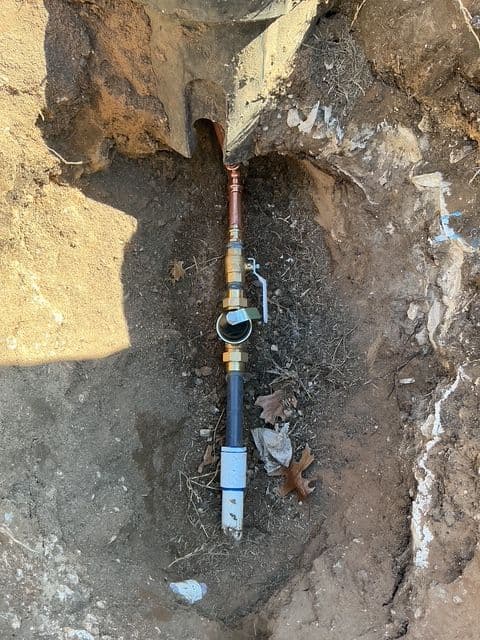
A Pressure Reducing Valve, commonly called a PRV, is a mechanical valve installed on the incoming water service to your home.
Its job is to reduce the water pressure supplied by the city to a safe level for your plumbing system.
Think of it as a traffic controller for water pressure.
The city may supply water at pressures far above what your home's plumbing is designed to handle.
The PRV reduces that pressure before it enters the home.
Why Do So Many Homes in New Braunfels and San Antonio Have PRVs?
The simple answer is:
The city water pressure is often too high.
Water providers must deliver enough pressure to serve thousands of homes across varying elevations and distances.
Because of this, it is common for municipal water systems to operate at pressures above what residential plumbing systems should receive.
Throughout New Braunfels and San Antonio, we frequently see incoming water pressures ranging from:
80 PSI
90 PSI
100 PSI
120 PSI
In some areas, including portions of Stone Oak, we have measured pressures as high as:
150 PSI
That amount of pressure can be extremely damaging to a home's plumbing system.
According to plumbing code:
Residential water pressure should not exceed 80 PSI.
Anything above that can contribute to plumbing failures and may even void certain manufacturer warranties.
Where Is a PRV Located?
In most homes throughout New Braunfels and San Antonio, the PRV is installed:
Directly After the Water Meter
The valve is usually located:
In the front yard
Near the street
Inside a valve box
On the homeowner's side of the meter
The PRV is typically buried underground but remains accessible through the valve box cover.
What Does a PRV Actually Do?
The PRV reduces incoming city water pressure to a safe operating range for the home.
For example:
If the city pressure is:
120 PSI
The PRV may reduce that pressure to:
60–70 PSI
This protects:
Water heaters
Faucets
Toilets
Shower valves
Washing machine hoses
Ice maker lines
Water softeners
Plumbing pipes and fittings
Without a functioning PRV, the entire plumbing system is exposed to unnecessary stress.
Why Is High Water Pressure a Problem?
Many homeowners assume:
"More pressure must be better."
Unfortunately, that's not true.
High water pressure places constant strain on every component of the plumbing system.
Over time it can contribute to:
Water Heater Leaks
Excess pressure can shorten water heater lifespan and cause fittings and valves to fail.
Leaking Faucets
Cartridges, seals, and internal components wear out faster.
Toilet Leaks
Fill valves and flappers often fail prematurely.
Water Hammer
Pipes may bang or knock when fixtures shut off.
Pipe Leaks
Fittings and connections are subjected to unnecessary stress.
Signs Your PRV May Be Failing
Because the PRV controls pressure for the entire home, failures often affect multiple fixtures at once.
Common symptoms include:
High Water Pressure
One of the most common failure modes.
The PRV stops regulating properly and allows excessive pressure into the home.
Low Water Pressure
The valve can also become restricted internally.
This may result in poor flow throughout the home.
Pressure Fluctuations
Pressure may seem normal at times and extremely high or low at others.
Water Hammer
Banging or knocking pipes can indicate pressure issues.
Plumbing Leaks
A sudden increase in fixture leaks may indicate a pressure problem.
Can a PRV Cause Low Water Pressure?
Absolutely.
Many homeowners assume low pressure is caused by the city.
In reality, a failing PRV is often the culprit.
When the internal components begin wearing out, water flow can become restricted.
Some homeowners notice:
Weak showers
Slow faucets
Reduced pressure when multiple fixtures are used
In severe cases, water flow can drop to almost nothing when several fixtures operate simultaneously.
How Long Do PRVs Last?
In our area, we typically see PRVs last:
Approximately 6–10 Years
However, lifespan depends on several factors:
Incoming city pressure
Water quality
Valve quality
Frequency of pressure fluctuations
Higher incoming pressures generally place more stress on the valve and can shorten its lifespan.
A Real Stone Oak PRV Failure
One memorable service call involved a homeowner in Stone Oak.
The homeowner had previously experienced a leaking temperature and pressure relief valve on their water heater.
Another company replaced the T&P valve.
Unfortunately, the home's water pressure was never tested.
Shortly afterward, the T&P valve began leaking again.
Then the homeowner experienced something unusual.
While using a hose-end weed killer sprayer, the bottle suddenly exploded apart when the water was turned on.
At that point, they called us to investigate.
When we tested the water pressure, we discovered the home was operating at:
Approximately 140 PSI
The failed PRV was no longer controlling the pressure.
To resolve the issue, we replaced:
The Pressure Reducing Valve
The Expansion Tank
Once completed, the home's water pressure returned to a safe operating range and the issues were eliminated.
Can a Homeowner Adjust a PRV?
Technically, yes.
Most PRVs include an adjustment mechanism.
However, that doesn't mean adjustment is always the best solution.
If the PRV is relatively new, adjusting the pressure may be appropriate.
However, once a valve reaches a few years of age, adjustment becomes riskier.
At Plunger Pros, we generally advise caution when adjusting older PRVs.
In many cases, adjusting an aging valve can result in:
Excessively high pressure
Extremely low pressure
Water hammer
Complete valve failure
For older valves, replacement is often the more reliable long-term solution.
The Expansion Tank Myth
One of the biggest misconceptions we encounter is:
"The expansion tank controls high water pressure."
This is false.
An expansion tank does not regulate incoming city water pressure.
The expansion tank's purpose is to absorb pressure created when water expands during the heating process inside the water heater.
The PRV and expansion tank work together, but they perform entirely different functions.
If your home has high water pressure, the solution is typically:
Repairing or replacing the PRV
Not replacing the expansion tank alone.
The Bottom Line
A Pressure Reducing Valve is one of the most important devices protecting your home's plumbing system.
Without a properly functioning PRV, high city water pressure can damage:
Water heaters
Toilets
Faucets
Pipes
Fixtures
Appliances
If you're experiencing high pressure, low pressure, pressure fluctuations, water hammer, or recurring plumbing leaks, having the pressure tested is often the first step toward identifying the problem.
Related Plumbing Resources
What Is Considered High Water Pressure?
Why Is My Water Bill Suddenly High?
How Do I Turn Off Water to My House?
Does Hard Water Damage Water Heaters?
Common Plumbing Problems in New Braunfels Homes
Need Your Water Pressure Tested?
Plunger Pros provides water pressure testing, PRV replacement, expansion tank replacement, water leak diagnostics, and plumbing inspections throughout New Braunfels, San Antonio, Schertz, Cibolo, Bulverde, Spring Branch, Canyon Lake, and surrounding communities.
Plunger Pros
Plumbing done the proper way
M45279
(830) 356-2141
Frequently Asked Questions
What does a PRV do?
A Pressure Reducing Valve lowers incoming city water pressure to a safe level for your home's plumbing system.
What pressure should my home be?
Residential water pressure should generally remain below 80 PSI. We typically prefer 60–70 PSI.
Can a PRV cause low water pressure?
Yes. A failing PRV can restrict water flow and create low-pressure conditions throughout the home.
How long does a PRV last?
Most PRVs in our area last approximately 6–10 years, depending on water conditions and incoming pressure.
Can I adjust my PRV myself?
Technically yes, but adjusting older valves can sometimes worsen the problem or cause valve failure.
Does an expansion tank fix high water pressure?
No. Expansion tanks manage thermal expansion. They do not regulate incoming city water pressure.
What are signs of a bad PRV?
High pressure, low pressure, fluctuating pressure, water hammer, and recurring plumbing leaks are common signs.
Why do homes in New Braunfels and San Antonio need PRVs?
Many municipal water systems in our area operate above 80 PSI, making pressure reduction necessary to protect residential plumbing systems.