Why Does My Water Smell Like Rotten Eggs?
Find out why your hot water smells like rotten eggs, the causes, and permanent solutions. Discover how to eliminate the sulfur odor effectively.
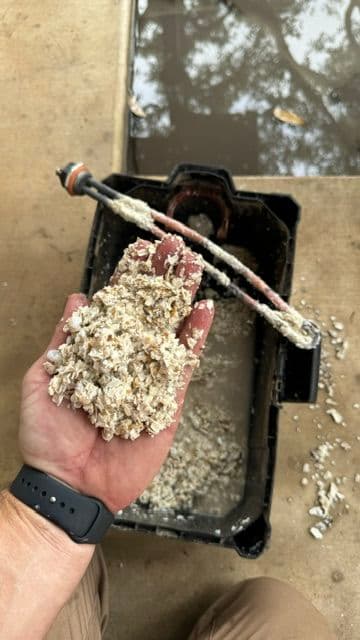
Why Does My Hot Water Smell Like Rotten Eggs?
Have you ever turned on your hot water only to notice a strong rotten egg or sulfur smell?
You're not alone.
This is one of the more common water heater complaints we receive throughout New Braunfels, San Antonio, Spring Branch, Bulverde, Schertz, Cibolo, Canyon Lake, and the surrounding areas.
The good news is that in most cases, the smell does not mean you need a new water heater.
Instead, the problem is usually caused by bacteria interacting with the sacrificial anode rod inside the water heater.
At Plunger Pros, we've solved this issue for many homeowners by identifying the cause and recommending a long-term solution instead of a temporary fix.
Let's look at why this happens and how it can be permanently corrected.
Why Does My Hot Water Smell Like Sulfur or Rotten Eggs?
The rotten egg smell is typically caused by sulfur-reducing bacteria growing inside the water heater.
These bacteria are harmless, but as they interact with the sacrificial anode rod, they produce hydrogen sulfide gas.
Hydrogen sulfide is what creates the familiar rotten egg smell.
The bacteria are not actually caused by the water heater itself.
Instead, the water heater simply provides an ideal environment for them to grow.
Why Does It Only Smell in the Hot Water?
This is one of the easiest ways to determine where the problem is coming from.
If only the hot water smells:
The issue is most likely inside the water heater.
The bacteria are growing on or around the sacrificial anode rod inside the tank.
If both the hot and cold water smell:
The problem is usually not the water heater.
Instead, the odor is likely coming from the incoming water supply and should be investigated separately.
This distinction helps narrow down the source of the problem before repairs begin.
What Is the Sacrificial Anode Rod?
Every tank-style water heater is equipped with an anode rod installed by the manufacturer.
Its purpose is to protect the steel tank from corrosion.
Traditional anode rods are commonly made from:
Magnesium
Aluminum/Zinc
These rods are called sacrificial because they slowly deteriorate over time to protect the water heater tank.
As the rod breaks down, it creates an environment where sulfur-reducing bacteria can thrive.
Which Anode Rods Are Most Likely to Cause the Smell?
We most commonly see this issue with:
Magnesium Anode Rods
These are the most common cause.
However, we've also seen sulfur odors occur with:
Aluminum/Zinc Anode Rods
Although aluminum/zinc rods may reduce the smell in some situations, they do not always eliminate it permanently.
Will Flushing the Water Heater Fix the Smell?
Sometimes.
Flushing the water heater can temporarily reduce or eliminate the odor because it removes:
Some of the bacteria
Sediment
Odorous water already inside the tank
However, flushing usually does not solve the underlying problem.
The bacteria often return, and the smell gradually comes back.
Many homeowners notice improvement for a short time before the odor returns weeks or months later.
The Permanent Solution
In most situations, we recommend installing a powered anode rod.
Unlike traditional sacrificial rods, powered anode rods use a small electrical current to protect the tank from corrosion.
Because they do not deteriorate, they do not provide the same environment for sulfur-reducing bacteria to grow.
Powered anode rods also actively help prevent the bacterial activity responsible for the odor.
The result is:
No sacrificial rod to replace every few years
Long-term corrosion protection
Elimination of recurring sulfur odors in most cases
At Plunger Pros, we typically install Corro-Protec powered anode rods, which carry a 20-year manufacturer warranty.
A Real Spring Branch Example
We've worked with multiple homeowners in the same Spring Branch neighborhood who experienced strong sulfur odors from their hot water.
Each home was only a few years old, and the odor was coming from the water heater.
Several homeowners had already hired another company to replace the original magnesium anode rod with an aluminum/zinc rod.
Initially, the smell disappeared.
Unfortunately, after a few months, it returned.
When we evaluated the systems, we recommended replacing the sacrificial anode rod with a powered anode rod instead.
After installing the powered anode rods, the sulfur smell disappeared and has not returned.
This is one of the reasons we often recommend powered anode rods as a permanent solution instead of repeatedly replacing traditional sacrificial rods.
Is the Rotten Egg Smell Dangerous?
Fortunately, in most residential situations, no.
The smell itself is generally considered a nuisance rather than a health hazard.
However, it can become extremely unpleasant.
Some homeowners tell us:
The smell fills the entire bathroom.
The odor spreads throughout the home when showering.
Guests notice it immediately.
Although it typically isn't dangerous, it is certainly something most homeowners want corrected.
Does This Happen in Tankless Water Heaters?
Not usually.
Tankless water heaters do not have a sacrificial anode rod.
Since there is no storage tank or anode rod, this specific type of sulfur odor is far less common in tankless systems.
If a rotten egg smell occurs in both the hot and cold water of a home with a tankless water heater, the issue is more likely related to the incoming water supply rather than the water heater itself.
What Should You Do If Your Hot Water Smells Like Rotten Eggs?
If you notice the odor:
Determine Whether It Is Only the Hot Water
This is the first step in identifying the source.
Flush the Water Heater (Optional)
Flushing may temporarily reduce the odor but usually isn't a permanent solution.
Have the Water Heater Evaluated
A licensed plumber can inspect:
The anode rod
The condition of the tank
Other potential causes
Consider Installing a Powered Anode Rod
If the odor is being caused by bacterial activity around the sacrificial anode rod, a powered anode rod is often the most reliable long-term solution.
The Bottom Line
If your hot water smells like rotten eggs but your cold water does not, the problem is usually inside your water heater—not your home's water supply.
While flushing the tank may provide temporary relief, the odor often returns because the bacteria causing it remain.
For many homeowners, replacing the traditional sacrificial anode rod with a powered anode rod provides a permanent solution while also offering better long-term protection for the water heater.
Related Plumbing Resources
Powered Anode Rods: Are They Worth It?
Does Hard Water Damage Water Heaters?
Tankless Water Heater Maintenance
Signs You Need a Water Softener
Water Softener vs. Water Conditioner
Need Help Getting Rid of Rotten Egg Smells?
If your hot water smells like sulfur or rotten eggs, Plunger Pros can help determine the cause and recommend the best solution.
We install powered anode rods, perform water heater maintenance, replace traditional anode rods, and service water heaters throughout New Braunfels, San Antonio, Spring Branch, Bulverde, Schertz, Cibolo, Canyon Lake, and surrounding communities.
Plunger Pros
Plumbing done the proper way
M45279
(830) 356-2141
Frequently Asked Questions
Why does only my hot water smell like rotten eggs?
In most cases, the odor is caused by sulfur-reducing bacteria growing inside the water heater around the sacrificial anode rod.
Why doesn't my cold water smell?
If only the hot water smells, the problem is usually inside the water heater. If both hot and cold water smell, the issue is likely with the incoming water supply.
Will flushing my water heater fix the smell?
It may temporarily reduce the odor, but the bacteria often return. Flushing alone usually isn't a permanent solution.
Does replacing the anode rod fix the problem?
Replacing a traditional anode rod may help temporarily, but the smell can return. A powered anode rod is often a more permanent solution.
Are powered anode rods worth it?
For many homeowners, yes. They help eliminate recurring sulfur odors, provide continuous corrosion protection, and do not need to be replaced every few years like sacrificial anode rods.
Is rotten egg smell in hot water dangerous?
In most residential situations, the odor is a nuisance rather than a health hazard. However, it should still be evaluated to identify the cause.
Can tankless water heaters develop this problem?
Not typically. Since tankless water heaters do not have a sacrificial anode rod, this specific issue is much less common.