PRV Replacement Done Right in New Braunfels
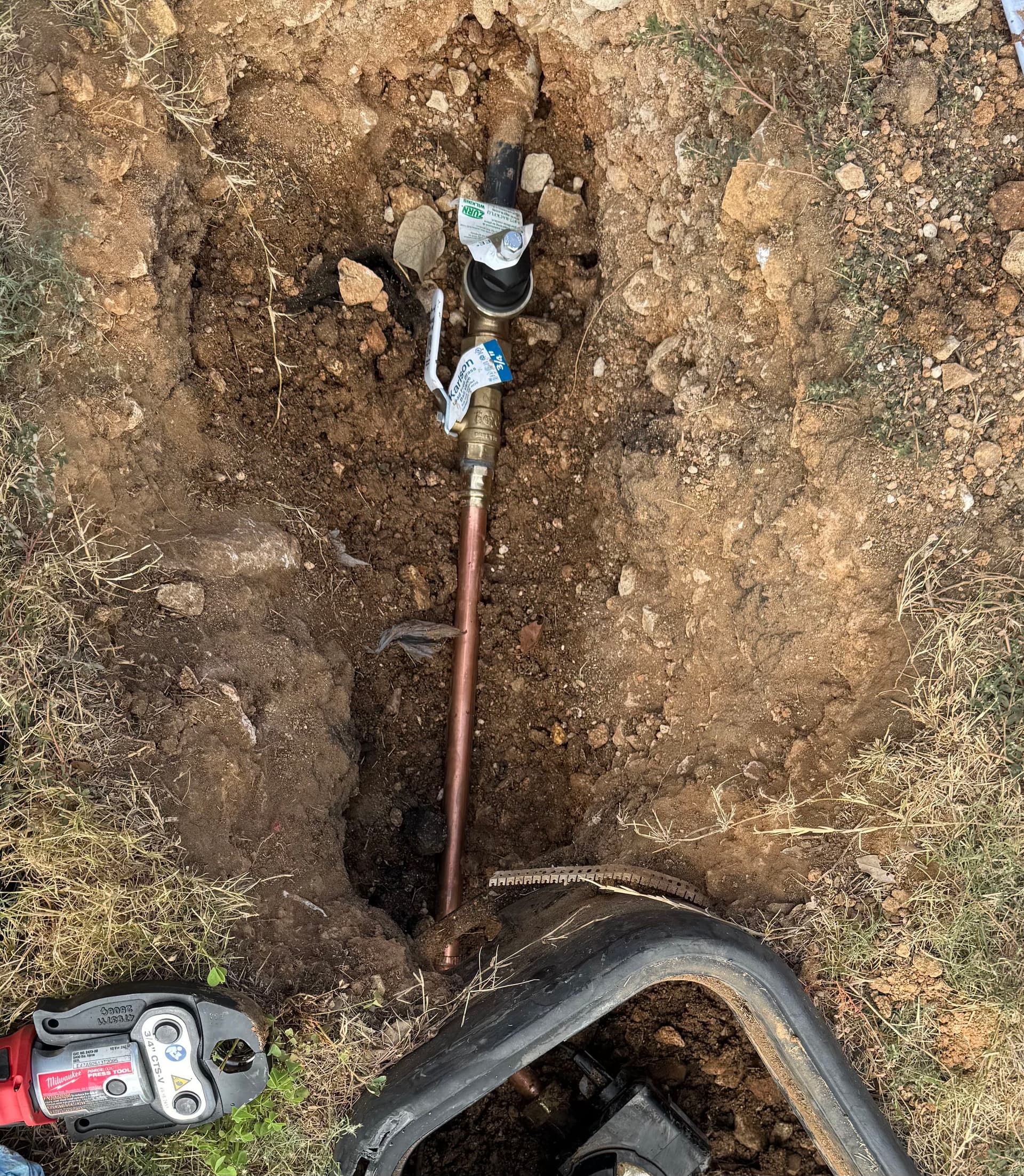
Most homeowners don't think about their pressure reducing valve until something goes wrong. A banging pipe. A faucet that sprays too hard. A water heater that keeps failing ahead of schedule. These are all signs that your home's water pressure may be running too high - and the PRV is what's supposed to keep that in check.
A PRV sits on your main water line and does one job: bring incoming water pressure down to a safe, steady level for your home. When it starts to fail, that protection disappears. Your pipes, fixtures, and appliances end up taking the hit every single day.
We handled a PRV replacement in New Braunfels recently that's a solid example of what this work actually looks like. The new valve is set, the copper line is clean, and a Milwaukee press tool was used to make the connections - no open flame, no soldering, tight and reliable. That's the kind of install that holds up.
If your pressure has been inconsistent - too strong at some fixtures, fluctuating throughout the day, or just plain off - it's worth having someone take a look. A failing PRV isn't always obvious, but the damage it causes over time adds up fast.
Catching it early is a simple fix. Ignoring it usually leads to bigger repairs down the road.